Loading...
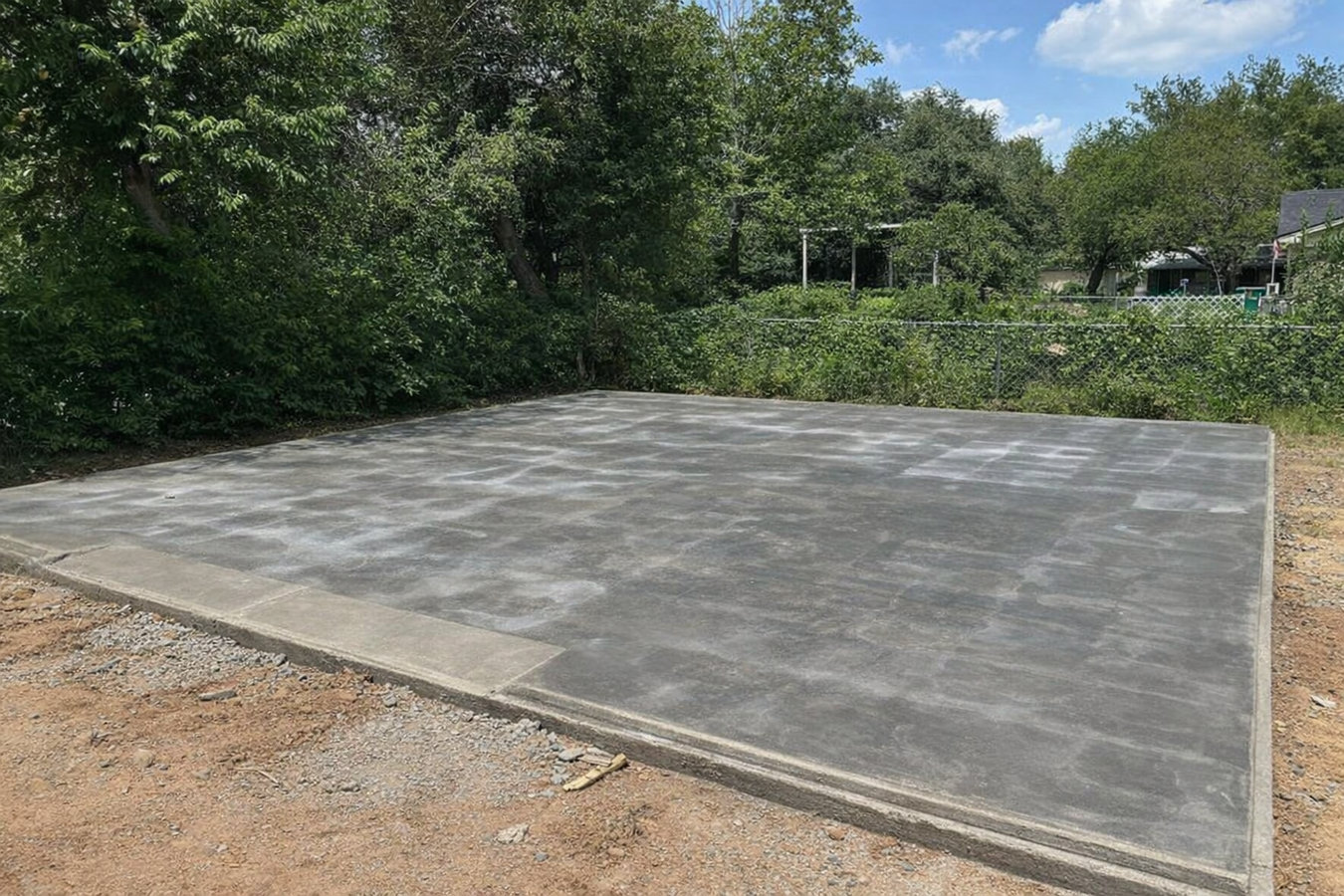
Abilene's clay soil moves with every rain and dry spell. A new slab built with the right prep, steel, and curing plan gives your structure a stable base that holds through decades of West Texas weather.
Slab foundation building in Abilene means clearing and grading the site, moisture-conditioning and compacting the clay soil, laying a gravel base and vapor barrier, placing steel reinforcement inside the forms, and pouring a single continuous concrete slab - most residential jobs run two to three weeks from permit approval to a cured, inspected foundation ready for framing.
In this part of West Texas, the ground preparation underneath the concrete matters as much as the concrete itself. Abilene's clay soil expands when it absorbs water and contracts when it dries out, and that constant movement will stress any slab that was not built with it in mind. Homeowners in established Abilene neighborhoods are often dealing with aging slabs that were poured before these soil conditions were fully understood - which is why replacement demand stays steady across the city.
If your project involves more than a floor slab - such as footings for walls or piers for a raised section - our concrete footings service covers the structural anchoring elements that tie your slab into stable ground below the active clay layer.
If interior doors that used to swing freely now drag or refuse to latch, or windows have become hard to open, the frame of your home may be shifting. In Abilene, this movement is often tied to clay soil expanding and contracting under the slab with seasonal moisture changes. It is a signal worth having a professional assess before it worsens.
Diagonal cracks fanning out from door frame corners, or long cracks traveling across a concrete floor, can indicate the slab is moving unevenly. In older Abilene homes built on less-prepared soil, these cracks develop gradually over years. Cracks wider than a pencil tip, or ones you can feel a ridge across, deserve professional attention.
Walk around the outside of your home after a dry stretch and look where the ground meets the foundation. A visible gap - sometimes an inch or more - is the clay soil shrinking away, which is common in Abilene's drought cycles. This gap allows water to rush against the foundation edge during the next rain, accelerating damage over time.
If you are adding a garage, room, or accessory dwelling unit to your property, a new slab foundation is the required starting point. And if a foundation professional has told you that an existing slab has moved or cracked beyond practical repair, a full replacement is the right path forward. In Abilene's older neighborhoods, this situation comes up more often than homeowners expect.
We build residential slab foundations for new construction, additions, and full replacement projects across Abilene and the surrounding West Texas area. Every job starts with a site visit to assess soil conditions, drainage, and the layout before we give you any numbers. We pour monolithic slab-on-grade foundations - the standard for this part of Texas - with continuous perimeter grade beams that carry the wall and roof loads down into the ground. For projects that also require structural anchoring into stable soil below the clay layer, our concrete footings service handles the below-grade elements that anchor the slab to more stable ground.
We also work alongside homeowners who need full foundation installation for larger new construction projects where the scope goes beyond a simple floor slab to include full structural engineering coordination and multiple inspection stages. All of our slab work includes permit handling, pre-pour city inspection, and a curing plan sized for whatever the weather is doing in Abilene when we pour.
Suits homeowners replacing a failed or aging slab on an existing property.
Best for homeowners building a new home, garage, or accessory structure from the ground up.
For homeowners adding a room, workshop, or attached garage to an existing structure.
Combines floor and footing in one pour - the most common and cost-effective approach for Abilene conditions.
Standalone concrete bases for workshops, barns, pool equipment rooms, and storage buildings.
Abilene sits on some of the most active shrink-swell clay soil in Texas, and the city also sees summer temperatures that regularly exceed 100 degrees with persistent wind and low humidity. That combination creates two separate challenges for foundation contractors: the ground moves constantly with moisture changes, and fresh concrete dries too fast unless you actively manage the curing process. A slab poured on unprepared clay in August without a curing plan is not built for Abilene - it is built to fail in Abilene. The USDA Web Soil Survey confirms that Taylor County soils rank among the most expansive in the region.
Much of Abilene's residential housing stock was built in the 1950s through 1970s, before modern soil preparation standards were routine, and homeowners in neighborhoods throughout the city - from Hardin-Simmons University corridors to the south side - are dealing with the results of those older construction practices. Homeowners we serve in Brownwood and San Angelo face similar clay soil and age-of-housing challenges, so our crews bring experience that translates directly across this region.
Reach out by phone or form and describe your project. We respond within 1 business day and will schedule a free on-site visit to assess soil conditions, lot layout, and the scope of preparation needed before giving you a written quote.
We handle the City of Abilene building permit on your behalf - you do not navigate Development Services alone. Permit approval typically takes several business days to a couple of weeks, so we factor this into your project timeline from the start.
We grade and compact the ground, moisture-condition the clay soil to reduce future movement, and lay the gravel base and vapor barrier. Steel reinforcement is placed inside the forms before the pour - you can walk through the setup and see it before concrete goes down.
The slab is poured in a single continuous pour, finished, and then actively protected during the curing period - especially important in Abilene's summer heat. A city inspector verifies the completed work meets code, and you receive permit documentation to keep in your home records.
Free on-site estimate, written quote, and permit handling included. No obligation - just a clear picture of what your project will cost and what it takes to do it right in Abilene's soil.
(325) 283-1250Abilene's shrink-swell clay is one of the most demanding foundation environments in Texas. We prepare every site specifically for local soil behavior - not generic slab practices - so your foundation stays level through years of wet and dry cycles.
We pull every required City of Abilene building permit and schedule the required city inspections as a standard part of the job. You get an official inspection record that protects your investment and matters at resale.
Pouring a slab in 100-degree Abilene heat without a curing plan is how foundations crack before they ever reach full strength. We schedule pours for cooler parts of the day and use proven techniques to slow moisture loss - because concrete that cures right is dramatically stronger.
We respond to every inquiry within 1 business day and provide free, written estimates before any work starts. The number you agree to is the number you pay - no vague estimates that turn into surprises on the final invoice.
The American Concrete Institute sets the standards we follow for reinforcement, mix design, and curing - and every project we complete in Abilene is permitted through the City of Abilene Development Services, giving you an official inspection record that follows the property.
Complete foundation installation services for new construction projects across Abilene, with full permit handling and city inspection coordination.
Learn moreReinforced concrete footings that anchor your structure to stable soil below Abilene's active clay layer.
Learn moreSpring and fall are the best windows for concrete work in West Texas - lock in your project date before the summer heat makes pours harder to manage.