Loading...
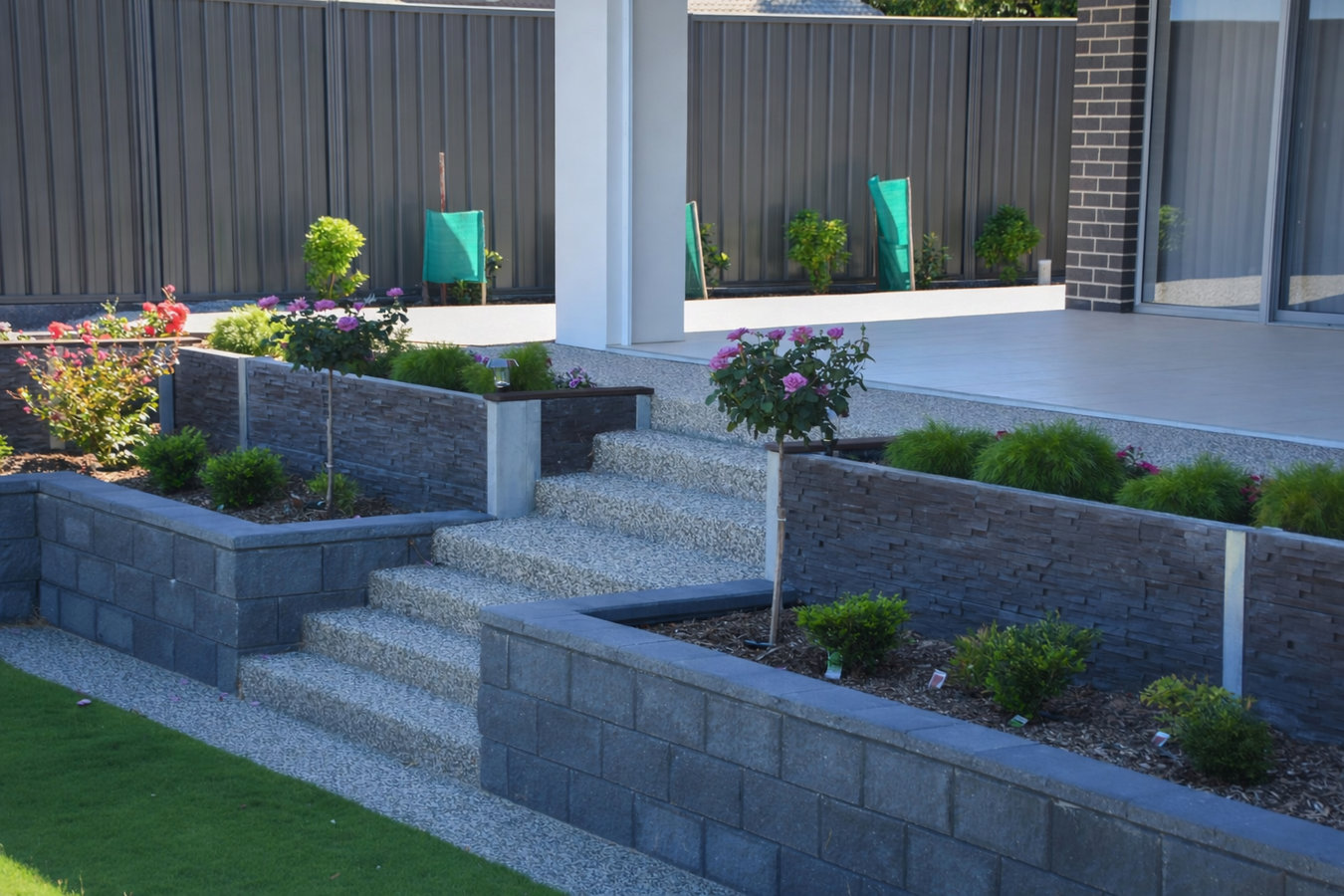
Soil washing away, a slope you cannot use, or an old wall starting to lean? A properly drained concrete retaining wall keeps your yard stable through Abilene's clay soil shifts and heavy rain events.
Concrete retaining walls in Abilene hold back soil on slopes and elevated areas by combining a solid footing, correctly formed concrete or block wall, and drainage material behind the wall so water pressure never builds to the point of failure. Most residential projects are complete within two to five days on-site, depending on wall length, height, and site access.
The reason so many retaining walls fail in West Texas is not the concrete itself - it is the drainage behind it. Abilene goes through extended dry spells and then gets intense rain. That pattern saturates clay soil fast, and if water has nowhere to escape behind a wall, the pressure eventually wins. Every retaining wall we build includes proper gravel backfill and a perforated drain pipe, because skipping that step here is not a shortcut - it is a guarantee of future failure.
Homeowners dealing with slope erosion near a structure often also need concrete floor installation in adjacent spaces like garages or outbuildings where the ground has shifted over time - combining assessments can surface drainage issues across the full property at once.
After a heavy rain, if soil, mulch, or gravel is moving downhill and collecting at the base of a slope, erosion is happening in real time. In Abilene, intense rain events following long dry spells accelerate this quickly. A retaining wall stops that movement before it damages landscaping, fencing, or a driveway.
If part of your yard is too steep to mow safely, too uneven for outdoor activities, or constantly losing soil to the lower part of the property, the land needs to be retained. This is common in Abilene neighborhoods built on rolling terrain where lots were not fully graded when homes were constructed decades ago.
If an existing wall, whether old concrete block, railroad ties, or stacked stone, is tilting forward, bowing outward, or showing large cracks, it is telling you it cannot handle the pressure behind it. Leaning is the most urgent sign. A repair or replacement now is far less expensive than dealing with the soil movement that follows a full collapse.
Abilene's clay soil does not absorb water quickly, so rain on a sloped yard often runs toward the house. Standing water near your foundation after storms, or soil that seems to be pressing toward the house on one side, can signal that a retaining wall combined with proper grading would redirect that water and protect your foundation from long-term damage.
We build poured concrete and block retaining wall systems for residential properties across Abilene and the surrounding region. Every project includes a site assessment to evaluate slope angle, soil type, drainage patterns, and any trees or utilities that affect where and how we dig. We install drainage gravel and perforated pipe behind every wall as a standard part of the build, not an add-on. For projects requiring structural support underneath a structure or hardscape, we can combine retaining wall work with concrete footings so the wall and any adjacent structure share a properly engineered base.
Walls taller than about four feet in Abilene typically require a city permit and, in some cases, an engineer's review. We handle the permit application and coordinate with the City of Abilene Development Services on your behalf. The International Code Council sets the building code standards that Abilene adopts for structural retaining walls, and our work is built to those requirements.
Best for homeowners who need high strength and a smooth, finished appearance.
Suits projects where faster installation and flexibility in height adjustment are priorities.
For homeowners separating planting beds, yard levels, or creating usable flat space.
For slopes with significant soil load or walls near driveways, buildings, or foundations.
For properties where water management is the primary problem driving the project.
Abilene sits on expansive clay soils that swell when wet and shrink when dry. That cycle puts more lateral stress on retaining walls than stable soil does anywhere else. A contractor who has not worked in Taylor County may not appreciate how much this changes the base preparation and drainage requirements. Long dry stretches followed by intense rain events - a pattern common in West Texas - can take a poorly drained wall from fine to failing in a single storm. The Portland Cement Association notes that drainage failure is the leading cause of retaining wall collapse, and that is especially true in climates like ours. Homeowners in San Angelo and Brownwood face similar soil and weather conditions, and we apply the same drainage-first approach on every project across the region.
Many of Abilene's established neighborhoods, particularly those built in the 1950s through 1980s, have mature trees, older underground utilities, and landscape features that predate modern drainage standards. Before any digging begins, we locate buried utility lines through Texas 811 and assess root systems or existing drainage patterns that could affect the project. These older neighborhoods also tend to have landscape infrastructure that was never designed to manage water at the volumes today's weather produces. A retaining wall built without accounting for that history tends to face problems sooner than one built with it in mind.
Reach out by phone or form and describe your slope or drainage situation. We reply within 1 business day and schedule a free on-site visit - phone quotes are not reliable for retaining walls, so an in-person look is essential.
We evaluate the slope, soil, how water moves across your yard, and any obstacles like trees or utility lines. You receive a written estimate covering wall height, drainage design, and what is included - before any work begins.
For walls taller than about four feet, we pull the City of Abilene permit on your behalf. We then excavate, prepare the base, build the wall, and install drainage material behind it so water has a clear path out.
After the wall is built and drainage is in place, we backfill and clean up the site. We walk through the finished project with you and explain the curing timeline for poured concrete walls before we leave.
Free on-site estimate. We reply within 1 business day. No commitment until you have a written quote.
(325) 283-1250We have built retaining walls on Taylor County's expansive clay soil and know how to prepare the base and design drainage for the movement this ground produces through wet and dry cycles.
Every wall we build includes gravel backfill and a perforated drain pipe behind it. Skipping drainage is the number one reason retaining walls fail in West Texas, and we do not skip it.
We manage the City of Abilene permit process when your wall height requires one. A permitted wall is on record, which protects you if you ever sell your home or file an insurance claim.
We respond to every inquiry within 1 business day and provide free on-site estimates with written quotes. No pressure, no phone guesses - you know exactly what the project involves before agreeing to anything.
The American Concrete Institute sets the industry standards we build to, and our approach to drainage and base preparation reflects what those standards require for expansive soil environments. When you combine local clay soil experience with permit compliance and drainage-first construction, you get a wall that actually lasts in West Texas conditions, not just one that looks right on installation day.
New concrete floors for garages, workshops, and utility spaces on Abilene properties with unstable or unprepared sub-grades.
Learn moreProperly sized concrete footings that give structures a stable base in Abilene's shifting clay soil.
Learn moreAbilene's wet season is the hardest test for slopes and old walls - call now to get your project on the schedule before the ground starts moving.