Abilene, TX
Retaining Walls & Concrete Masonry
A retaining wall does real work, holding back soil, managing drainage, and keeping your yard or property stable, and we build them to last for decades without shifting or leaning.
Why the Right Retaining Wall Makes a Real Difference
Soil erosion, yard flooding, and hillside slippage are real problems for properties across West Texas. If your yard has a slope, a grade change between your home and the street, or a raised planting bed that keeps washing out, a properly engineered retaining wall solves those problems for good.
The key word is properly. A wall that is not built with adequate drainage, the right footing depth, and correct batter (backward lean) will lean, crack, and eventually fall over. We build every wall to hold, not just to look good on day one.
What retaining walls are used for
- Holding back sloped soil to create flat usable yard space
- Preventing erosion along driveways, walkways, and property lines
- Terracing hillside lots into level planting beds or outdoor living areas
- Supporting raised garden beds and landscape borders
- Separating grade levels between neighboring properties
- Protecting foundations from soil movement and water pressure
We build retaining walls for homeowners and commercial property owners throughout Abilene, TX and the surrounding area.
Retaining Wall Materials: What We Use and Why
The right material depends on the height of your wall, the soil conditions, the load it needs to hold, and your budget. Here is a breakdown of the main options we work with:
Poured Concrete Walls
Poured-in-place concrete is the strongest option for taller walls and situations with significant soil pressure. We form and pour the wall with rebar reinforcement and a proper footing below the frost line. This is the standard for walls over four feet tall or where long-term structural performance is critical.
Concrete Masonry Units (CMU Block)
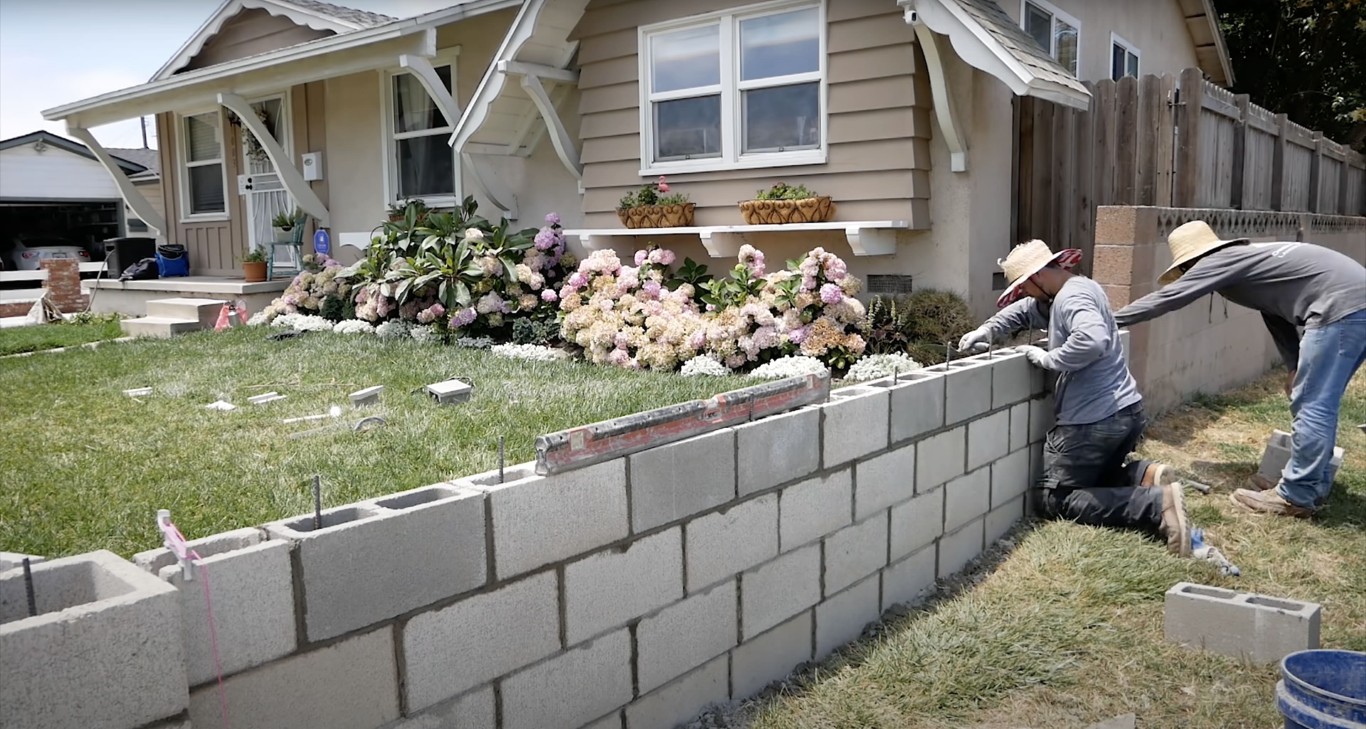
CMU block walls are commonly used for both residential and commercial applications. They are versatile, can be reinforced with rebar and filled with grout, and work well for walls of varying heights. CMU walls can be left bare, stuccoed, or faced with stone veneer depending on the aesthetic you want.
Segmental Retaining Wall Block
Segmental block systems like Allan Block or similar products are a popular choice for residential landscape walls. They look clean, install quickly, and do not require mortar. They work well for walls up to about four feet. For taller applications, we use a geogrid reinforcement system to tie the wall back into the soil.
Drainage Behind the Wall
Every wall we build includes proper drainage. Hydrostatic pressure from water building up behind a wall is the leading cause of wall failure. We install gravel backfill and perforated drainage pipe to direct water away from the wall base. Without this step, even a well-built wall will eventually fail.
If your retaining wall project is part of a larger concrete scope, we can also handle the concrete slab and foundation work as part of the same project.
Signs Your Property Needs a Retaining Wall
Not every slope needs a wall, but there are clear signs that one would solve a real problem on your property. If any of these sound familiar, it is worth calling us out for an estimate:
Soil is washing off a slope every time it rains. Water is running toward your foundation instead of away from it. Your yard has an awkward grade that makes it hard to use or maintain. A garden bed keeps collapsing at the edges. You want to add a flat patio or seating area to a sloped backyard.
Existing walls that are leaning, cracking, bulging outward, or showing mortar gaps need attention. A leaning wall is not just an eyesore. It is a safety issue and a structural failure in progress. We can assess whether a repair is feasible or whether the wall needs to come down and be rebuilt with proper drainage and footing.
For properties where soil movement is also affecting a concrete driveway or flatwork, we often combine retaining wall work with concrete patio installation to address the full exterior at once.
Common Questions About Retaining Walls
Do retaining walls in Texas require a permit?
In Abilene and most Texas municipalities, retaining walls under four feet tall typically do not require a permit. Walls taller than four feet, or walls that are load-bearing or adjacent to a public right-of-way, often do require a permit and sometimes an engineer's stamp. We can let you know during the estimate whether your project is likely to need a permit and help you understand the process.
How long does a properly built retaining wall last?
A poured concrete or CMU wall built with a proper footing, rebar, and drainage can last 50 years or more with minimal maintenance. Segmental block walls, when installed with geogrid reinforcement on taller sections, typically last 20 to 40 years before any significant maintenance is needed. The single biggest factor in wall longevity is drainage. Walls that trap water behind them fail early, every time.
Can you repair a retaining wall that is leaning or cracking?
It depends on the cause and extent of the damage. Minor cracking in a poured wall can sometimes be filled and sealed. But a wall that is actively leaning has usually lost its footing stability or has failed drainage, and in that case rebuilding is the only real fix. Patching a leaning wall without addressing the root cause just delays the inevitable. We will be straight with you about what we find and what your best options are.
Get a Free Estimate on Your Retaining Wall in Abilene, TX
Call us and we will come out to assess your slope, soil, and drainage situation. We will walk you through the right wall type and size for your project and give you a written quote before anything starts.